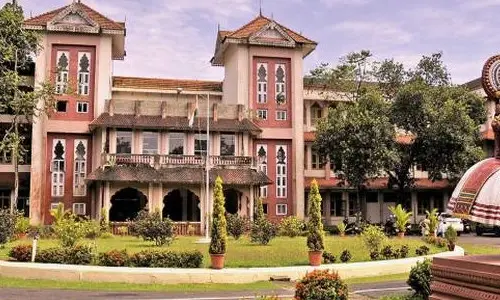
Kochi: The School of Environmental Studies, Cochin University of Science and Technology (CUSAT), has launched a new Indo–Russian SPARC research project led by Dr. Usha K. Aravind. The project focuses on the sustainable management of end-of-life membranes used in water treatment and purification systems.
The project addresses key challenges related to membrane waste by developing practical approaches for membrane recycling, reduction of plastic pollution, and extension of membrane module life. It aims to support circular economy practices through membrane refurbishment, waste valorisation, and improved resource recovery, while reducing the environmental impact of water purification technologies.
Major partners in the project include leading membrane research laboratories, the Analytical Chemistry Division of St. Petersburg State University, and the Inter University Instrumentation Centre (IUIC) at Mahatma Gandhi University (MGU). These collaborations combine expertise in membrane technology and analytical methods to study biofouling control, polymer degradation, and closed-loop recycling processes. Experimental studies will be supported by life-cycle assessments to develop solutions that can be scaled for real-world application.
This project builds on Dr. Usha K. Aravind’s experience as Indian Principal Investigator in all phases of the SPARC programme, as well as several Ministry of Education–funded projects related to membranes, air pollution, and water pollution. Her previous collaborations include institutions such as Pohang University (South Korea), Ben-Gurion University (Israel), and St. Petersburg State University (Russia).
The SPARC programme, supported by the Ministry of Education, Government of India, promotes collaboration between Indian and international institutions through student and faculty exchanges. Students who participated in earlier SPARC exchanges under Dr. Usha have secured positions in leading laboratories and research institutes worldwide, highlighting the programme’s role in developing global research capacity.

The newly launched project is expected to contribute to sustainable water treatment practices and strengthen international research collaboration in environmental science and technology.